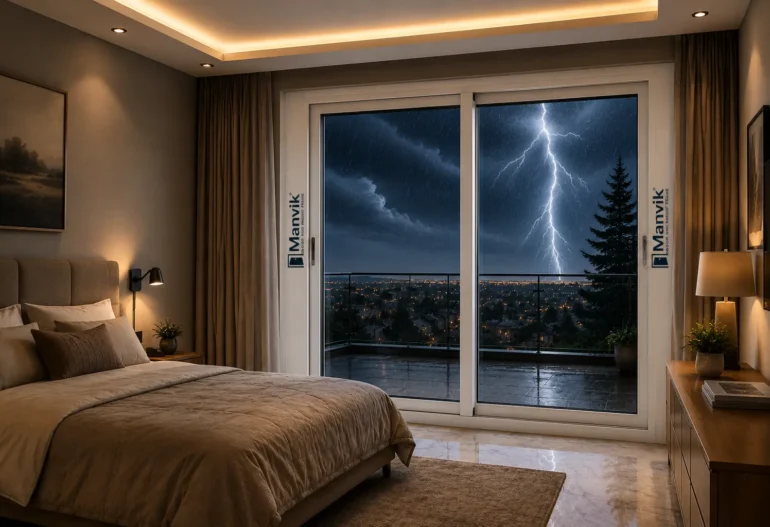
Weather Resistant Window Frames
Weather-resistant window frames are windows constructed and installed to withstand heat, rain and humidity, wind, dust and UV exposure with no significant warping, leakage or damage to the surface in the course of time. The true weather resistance doesn’t rely only dependent on the frame’s materialit’s all about the coating’s quality and design of the window drainage, seals glass hardware, and what the windows are mounted.
What Are Weather Resistant Window Frames?
A weather-resistant window frame is engineered using the right material and protection coating design and setup—so as to lessen the effects of environmental stress such as sun, rain, dust, humidity, and temperature fluctuations on the structure of the window and its performance over the course of its life.
The reason is simple that a window is one of the biggest openings that can be found in any building and should keep out the elements while opening and closing effortlessly every year. If a window is truly weatherproof, it must be able to resist water intrusion when it rains, stand up to wind loads structurally, resist the effects of long exposure to sunlight, and operate without sagging, sticking or corroding due to the temperature and humidity fluctuating throughout the season.
It’s important to be exact in this regard, as these terms are frequently employed interchangeably in marketing but really mean something different:
- Weather-resistant: designed to withstand a wide range of conditions (rain and sun and wind) quite in the long run, however, it is not claiming to be impervious.
- Water-resistant specifically is resistant to water penetration to an important degree; however, it is not always watertight in any circumstances.
- Rain-resistant It performs well under normal rain conditions and is particularly effective when combined with an effective drainage system and sealing.
- Weatherproof—A more definite claim that suggests a very high (often close to total) degree of protection and is best used only in conjunction with actual test information and not assumed as a default.
Any frame, regardless of the material or manufacturer, is invincible to any weather conditions for a long time. Performance is always dependent on the whole window system, and most crucially, on regular maintenance.
Why Indian Homes Need Weather Resistant Window Frames
The geography of India means that buildings and homes experience distinct and often extreme weather conditions in one year. A window that is not designed with considering this is among the most frequent—and often overlooked—causes of long-term maintenance headaches.
Extreme Summer Heat
In cities such as Delhi, Nagpur, and most of central India, windows facing south and west can be exposed to the direct sunlight for long periods of time at temperatures that are well above ambient temperature. Over time the heat load could alter the surface coatings’ seal materials, as well as window performance, if the window’s system was not designed with the possibility of heat exposure in the back of your mind. Protect Your Home from Extreme Heat
Heavy Monsoon Rain
The coastal cities like Mumbai, Kochi, and Chennai, together with a lot of eastern India, experience massive, long-lasting rain in the monsoon season. Rain driven by wind—in which the rain falls horizontally through the window instead of falling straight down—is a particular problem that tests drainage and seals much more than a light vertical shower could.
Humidity and Moisture
The coastal and high-rainfall regions have an extremely high humidity throughout much of the year. This can affect the speed at which surfaces dry following rain. It also can cause condensation on glass interiors and frames when glass and ventilation aren’t adjusted to the climate.
Strong Winds
Wind exposure is extremely variable based on where it is located. A ground-floor window in a protected courtyard will experience a very different load than a window on the 20th floor of an open, high-rise façade or located in a coastal zone that is susceptible to cyclones. Wind load influences both the structural requirements and the strength of seals when under pressure.
Dust and Airborne Particles
Northern as well as western India In particular, northern and western India face frequent dust storms during the winter months and generally higher dust levels. Dust can build up in drainage channels and tracks and, in the event of not being cleaned, could interfere with drainage and window smoothness over time.
UV Exposure and Intense Sunlight
India is exposed to UV radiation with high intensity across the entire country throughout the year. Long-term exposure to UV can slowly alter the surface coatings as well as certain seals, which is the reason the material’s coating and quality are important for the long-term look and functionality.
Seasonal Temperature Changes
Many areas of India experience significant fluctuations between winter highs and summer lows. Materials expand and contract in response to temperature. Window systems must be designed to handle this fluctuation without jeopardizing sealing or operation.
How Does Weather Damage Window Frames and Window Systems?
Weather-related window problems usually manifest as damage to the surface or wear on seals problems with hardware obstructions to drainage, and when it comes to ferrous metals that have not been treated—corrosion. The exact risks and magnitude depend on the frame’s material as well as the coating’s quality and the manner in which the window was constructed. sliding windows for home
Here’s a more detailed review of how these issues generally occur:
- Leakage of water usually stems from poor drainage seals that have degraded or gaps in the junction of wall-to-frame rather than the material used in the frame.
- Retention of moisture in channels and tracks, especially in areas where drainage holes are filled with dust or other debris, could allow water to sit for longer than it needs to.
- Surface degradation—such as fading or chalking or the breakdown of coatings—is affected by the quality of the coating and the cumulative exposure to UV/weather over time.
- Risk from corrosion is highly dependent on the base material as well as the quality of the protective treatment The different finishes and metals react very differently to exposure to moisture.
- Seal degradation occurs gradually as the gasket material ages and deteriorates, especially when exposed to repeated heat-cool cycles as well as UV exposure.
- Hardware problems such as rigid handles or poorly aligned locks are often the result of the combination of humidity, dust, and general wear and tear if the hardware isn’t regularly checked.
- Blockage in drainage due to dust, leaves, or debris is among the most frequently occurring and most easily reversible sources of water pooling on sills.
- Variations caused by ultraviolet light to the colour of frames or gasket flexibility develop gradually and become visible after a number of years without maintenance.
- Problems with installation, like a lack of sealing at the frame-wall interface, could undermine an excellent window system.
It’s important to reiterate that different materials react to these stressors differently, and that’s why the comparison of materials later on in this guide is crucial.
What Makes a Window Frame Weather Resistant?
Weather resistance in the window is dependent on 10 interconnected elements—the frame material, coating quality, the design of windows, drain gaskets and seals, locking systems, glass choice, and the quality of installation and maintenance that continues. A weakness in one of these could compromise the other.
Suitable Frame Material
It is the base materials that determine how a frame responds to heat, moisture, and structural loads prior to any coating or design element is applied.
Quality Protective Finish or Coating
Particularly for metal-based frames, the protective coating is between the material used for the base and the surrounding environment. Quality of coating, thickness, and process for application all affect how it will perform over the many years of exposure.
Proper Window Design
The frame profiling—which includes how the sections connect, where the water flows, and the way in which the sash is connected to the frame—can have significant influence on the performance of weather conditions, sometimes more than the actual material.
Drainage and Water Management
A window requires an open path for water to flow over the sill or track to escape the system instead of accumulating or being pushed inside. This is among the most crucial yet undiscussed components of a weather-resistant window.
Weather Seals and Gaskets
Gaskets and seals fill in the tiny gaps between moving components (sash or frame) that could let in water and air. Their quality of material and the correct fit directly affect performance.
Strong and Suitable Hardware
Hinges, rollers, handles, and locking hardware have to be designed in accordance with the projected exposure; for example, a coastal high-rise building will require different hardware as compared to a courtyard that is sheltered inside. window.
Secure Locking System
A window that is properly secured and maintains a constant pressure on its seals that improves security and performance in the weather.
Correct Glass Selection
The glass’s thickness and type affect not only the performance of the weather but also noise, heat, and safety and must be aligned to the window’s particular direction and the angle of exposure.
Professional Installation
Even the most well-constructed window may be ineffective if installed with gaps, insufficient sealant, or improper alignment at the junction of the frame and wall.
Regular Maintenance
Any window regardless of its material is completely maintenance-free. Cleaning, seal inspections, and drainage inspections are the main factors that keep the weather performance constant over time.
The term PPGI is a reference to the term “pre-painted” galvanized iron. In simpler words, it means steel that has first been galvanized and then coated in a zinc coating for protection from corrosion and later finished with an application of paint to the factory for surface protection and aesthetics. This is the reason PPGI is now a widely employed product used in Indian frames for windows, doors, and window production.
Certain aspects are worth knowing concerning PPGI in the environment of weather resistance
- A galvanized steel base creates a zinc-protective coating between the steel and its surrounding environment. This is the steel’s primary line of defense against degradation caused by moisture.
- Pre-painted finishes create a decorative and protective layer over the galvanized base. the quality of the paint system (thickness of the coating, adhesion, formulation) is a significant factor in the longevity of surface performance.
- The quality of the manufacturing and fabrication—the way the sheet is cut, formed, and joined into frames—affects the degree to which that protective coating remains at joints, edges, and points of fabrication.
- The window’s design as well as the profile that is built within a PPGI sheet determines the degree to which the final window handles air, water, and structural loads.
- Requirements for maintenance While generally simple, there are some that remain; periodic cleaning and inspections are essential to the long-term performance of the coating.
- Modification of HTML0 is among the many advantages of PPGI sheets, which can be made into a variety of window designs and sizes that can be adapted to both commercial and residential specifications.
It’s crucial to be clear on this point: not every PPGI window frame is created equal. Two frames made of PPGI could have significantly different weather performance based on the quality of the galvanization process used to create the base and the paint system employed and the way in which the frame was made as well as the structural design of the window, the seals and hardware employed, the level of installation, and the level of maintenance it receives after installation. PPGI is a solid foundation material; however, it’s the entire system that is built upon it that determines how well a window will perform in Indian weather conditions.
How PPGI Window Frames Can Handle Different Weather Conditions
PPGI Window Frames in Extreme Summer Heat
The degree of heat exposure for any window is influenced by many elements that work together: the amount of direct sunlight the window is exposed to and its ability to handle heat, the orientation of the window to the building, the glass’s specifications, and whether or not external shading is employed. A high-quality pre-painted finish on the PPGI frame is specifically designed to stand up to continuous sun and heat; however, it is important not to overstate the importance of this. The PPGI frame performance alone is not enough to create a windows a full heat insulation system. Overall heat performance in a space is dependent on the entire window system (frame glass, frame, and design) which is in sync with the ventilation and shading method for the space.
PPGI Window Frames During Heavy Rain
The performance of any window—including PPGI—boils down to the design, drainage, and sealing instead of the frame material as a whole. A properly designed PPGI window profile channelizes water away from joints that are vulnerable using proper sealing at the sash frame interface and is dependent on an appropriately sealed frame-to-wall joint when it is installed to stop water from leaking through the window. The above areas—and in addition to the PPGI material in itself—are typically where problems with rain arise.
PPGI Window Frames in Humid Conditions
In areas that are constantly humid the frame’s protection surface is subject to more water exposure than in drier climates. A properly applied paint system over a galvanized PPGI base is specifically designed to handle this. However, humid-climate frames require more careful maintenance, including periodic inspection and cleaning to spot any signs of wear and tear before it escalates into a larger problem.
PPGI Window Frames in Strong Winds
The performance of wind depends on the frame type and window size, as well as the particular hardware utilized and the manner in which the window is erected and fixed into the structural opening. Each of these factors should be considered for the specific project, not presumed. Large sliding windows that are located on the top floor in a coastal high-rise are, for instance, subject to specific wind requirements that are different from tiny windows that is located on a ground floor with a protected area. It’s crucial to know that there is no wind rating or wind resistance value that is recommended for PPGI frames that aren’t verified with test data that is specific to the project The particulars vary according to the frame’s design and should be verified by the manufacturer for the particular project.
PPGI Window Frames Under UV Exposure
The long-term exposure to UV over time can alter the appearance and flexibility of certain seal and coating materials. The quality of the coating—the formula and the process for applying the “pre-painted” coating “pre-painted” layer—is the most important aspect in how a PPGI frame’s finish maintains its appearance even after long-term sun exposure. This is in conjunction with periodic cleaning to lessen the buildup of surface material that could accelerate wear. Weather Resistant Window Frames
Weather Resistant Window Frames vs Weatherproof Windows
These terms get used loosely, but they describe different levels and types of performance:
| Term |
What It Generally Means |
| Weather resistant |
Designed to reduce the impact of a range of conditions (rain, heat, wind, humidity) over time — a broad, realistic claim |
| Water resistant |
Resists water penetration to a meaningful degree under typical conditions |
| Airtight |
Minimizes air infiltration through the closed window |
| Watertight |
A stronger, more absolute claim of preventing water entry — should be backed by specific testing |
| Wind resistant |
Designed to withstand a defined range of wind loading, ideally with project-specific verification |
| Rain resistant |
Performs well under typical rainfall when paired with good drainage and sealing |
| Weatherproof |
The strongest claim, implying very high protection across conditions — should never be assumed without documented testing |
The takeaway: these terms are not interchangeable, and a responsible buyer should ask what specific claim is actually being made — and whether it’s backed by data — rather than assuming “weatherproof” and “weather resistant” mean the same thing.
PPGI vs uPVC vs Aluminium vs Wood Window Frames
Each material brings a different set of trade-offs, and the “best” choice genuinely depends on the project, budget, location, and priorities.
| Factor |
PPGI |
uPVC |
Aluminium |
Wood |
| Rain exposure |
Performs well with good coating, drainage, and sealing |
Generally handles rain well; doesn’t absorb moisture |
Performs well with quality finish and drainage design |
Requires strong sealing and finish; more vulnerable without upkeep |
| Moisture resistance |
Good, dependent on galvanization and coating quality |
Naturally resistant; doesn’t swell or rot |
Good; doesn’t rot, but finish quality still matters |
Needs regular treatment to resist moisture-related issues |
| UV exposure |
Coating-dependent; quality paint systems hold up well |
Generally UV stable in quality formulations |
Generally stable; anodized/powder-coated finishes matter |
Can fade or degrade without UV-protective finishing |
| Durability |
Strong structurally when well-fabricated and maintained |
Durable with low material fatigue over time |
Strong-to-weight ratio; durable with correct design |
Durable when well-maintained; more upkeep-intensive |
| Maintenance |
Low-to-moderate; periodic cleaning and inspection |
Low; minimal upkeep required |
Low-to-moderate; periodic cleaning |
Higher; needs periodic refinishing/treatment |
| Customization |
High — flexible fabrication for varied sizes and styles |
Moderate; profile-based system |
High — flexible for large spans and custom shapes |
High for design; more constrained for very large spans |
| Residential use |
Well suited, widely used |
Widely used |
Well suited, especially larger openings |
Popular for traditional or heritage-style homes |
| Commercial use |
Common in bulk/project applications |
Used, though less common in large commercial facades |
Very common for commercial facades |
Less common at scale |
| Cost considerations |
Generally competitive for the value delivered |
Mid-range depending on profile system |
Can range from mid to premium depending on specification |
Often higher, especially for quality hardwood |
| Long-term ownership |
Depends on coating/fabrication quality and maintenance |
Generally low ongoing cost |
Generally low ongoing cost with quality finish |
Higher ongoing maintenance investment |
Choose PPGI When…
You’re looking for a durable frame that is a customizable and cost-effective material that can be used for commercial or residential projects. You’re collaborating with a company that is able to demonstrate high-quality galvanization and a strong paint system, as well as sound fabrication methods.
Also Read:- what is PPGI
Choose uPVC When…
A low-maintenance system and a consistent thermal/acoustic performance are the top priorities The project does not need a large span or structurally heavy loads.
Also read: upvc sliding window india
Choose Aluminum When…
There are large windows and slim sightlines or a contemporary commercial-grade façade, and they are ready for a high-quality finishing system.
Choose Wood When…
The aesthetic appeal and the traditional or traditional design style are more important than the fact that you can keep your furniture in good condition and you can commit to regular cleaning and refinishing.
There isn’t a single “best” material for every project. The best selection is based on the construction type, climate exposure, budget, as well as maintenance requirements. Weather Resistant Window Frames
How to Choose Weather-Resistant Window Frames for Your Home
- Know the climate of your area. A coastal home, a hill station at high-altitude property, or a dry-interior home all have their own climate preferences.
- Examine sun exposure. Note which windows have direct sun exposure for longer hours, particularly west-facing windows.
- Think about the exposure to rainfall. Factor in whether your region is subject to wind-driven rain, which can cause drainage problems and seals more effectively than vertical rain.
- Take into consideration the impact of wind on your building. High floors, exposed facades, and areas that are prone to cyclones or coastal storms require special attention to physical and mechanical specifications.
- Select the appropriate frame material in light of the above comparison and the priorities of your project.
- Select the appropriate glass to suit your needs, orientation, noise environment, and temperature exposure.
- Verify gaskets and weather seals for quality of material and the correct fit.
- Review the drainage design and ask how the window handles and channelizes water away.
- Make sure your hardware is in good condition, especially when you have windows that are larger or more exposed.
- Make sure to install it professionally, as even the most well-designed windows can’t perform in a poorly sealed frame-to wall junction.
Best Weather Resistant Window Frames for Different Areas of a Home
Living Room
The windows are often the biggest openings in a house. Living rooms benefit from a strong drainage design and high-quality glass as they get the greatest direct sunlight and also the most frequent usage.
Bedroom
Bedrooms are sealed for acoustic as well as weather convenience and devices that work well for everyday use.
Kitchen
Kitchen windows face the effects of heat and moisture that may be generated from cooking and regular opening. Durable hardware and a ventilator-friendly design are important here.
Bathroom
Bathrooms are characterized by higher humidity and generally smaller windows, which is why moisture-resistant finishes as well as an airtight design are essential.
Balcony
Sliding doors and windows on balconies are usually the most vulnerable openings to weather within the home, as they are exposed directly to wind and rain. The quality of sealing and drainage is crucial here.
High-Rise Apartment
Higher floors usually have greater exposure to the wind, which is why structural design, hardware, and the quality of installation deserve special consideration.
Villa
A lot of homes have bigger windows and more orientations of exposure on a single property, resulting in an integrated approach to materials and design options per elevation.
Commercial Building
Commercial projects usually involve greater quantities, standard specifications, and higher maintenance and performance expectations that make consistency among manufacturers and documentation crucial. Weather Resistant Window Frames
How to Prevent Rainwater Leakage Through Windows
- Make sure drainage holes and channels are free of leaves, dust, and other debris—this is among the easiest and most efficient preventive measures.
- Check window tracks regularly to look for any accumulation that might impede the flow of water.
- Inspect gaskets and seals for cracks, hardening, or gaps, especially prior to the monsoon season beginning.
- Examine the frame-wall joints to find apparent gaps or signs of degraded sealant.
- Check to see if the window was fitted using the appropriate sealant for the structural opening and not just on the frame.
- Apply or reapply the appropriate weatherproof sealant on joints that are showing wear.
- Maintain the hardware, hinges, rollers, and locks cleaned and in good working order so that the window is closed completely and equally.
- Drainage areas should be cleaned as part of your routine maintenance plan, not just after the onset of a problem.
How to Choose Windows for Heavy Rain and Monsoon
Quick Answer: For heavy rain and monsoon-like conditions, choose windows with well-designed, clear drainage pathways; high-quality gaskets and seals; sound frame fabrication, andcrucially — a professional installation that is properly sealed at the junction of the wall.
Beyond the material selection process Some specific, monsoon-specific steps are important:
- Find out from your installer or provider to explain how the window’s drain system functions and where the water drains.
- Verify the seal and gasket’s material is of good quality, as these are the first protection against the rain that is driven by wind.
- Make sure that the hardware is checked for a smooth, fully closed closure. A window that isn’t fully closed can compromise even the best sealing.
- Clean your tracks prior to the monsoon season starting, which is the time when dust accumulation is likely to cause drainage problems.
- Check seals every year, as gaskets naturally age with years of heat-cool cycles.
How to Safeguard Window Frames from Extreme Summer Heat
- Utilize external shade such as overhangs, awnings, louvers, or overhangs — for windows that receive a lot of direct sunlight exposure.
- Select the right glass for your specific orientation and the load of heat and heat load, working with your window provider.
- Window orientation should be considered in the design of your building, if it is feasible, especially for new construction.
- Blinds or curtains can be used as an additional inexpensive heat-management layer.
- Keep a good cross-ventilation system in place to minimize the risk of heat buildup around window openings.
- Check the frame’s surface regularly to detect early signs of damage to the coating caused by prolonged heating exposure.
- Examine seals for any signs of cracks or hardening that could result from prolonged heat.
It’s important to note that the overall heating control inside the home is dependent on more than windows by themselves; the wall insulation, roof insulation, and the overall design of the building all play an important part in determining the window’s specifications.