

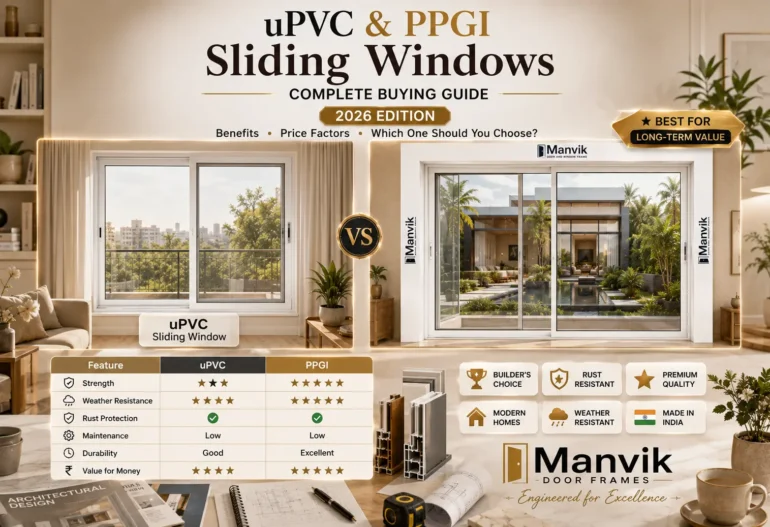
If you’ve started researching windows for a new home, a renovation, or a commercial project, you’ve probably landed on uPVC sliding windows India as one of the top recommendations from architects, interior designers, and window dealers. And for good reason — uPVC has become one of the most widely specified window frame materials in Indian residential construction over the last decade.
But before you commit to any window system, it helps to understand what uPVC actually offers, where it falls short, what it costs, and how it stacks up against other frame materials that are gaining ground in the Indian market — particularly PPGI sliding windows, which many builders and architects are now specifying for projects that demand higher structural strength and long-term durability.
This guide walks through everything you need to make an informed decision, without the sales pitch.
uPVC Sliding Windows India
uPVC sliding windows are horizontally opening windows made from unplasticized polyvinyl chloride, a rigid, weather-resistant plastic profile reinforced internally with steel or aluminium. They’re popular in India for their low maintenance, decent thermal insulation, and moderate cost. PPGI sliding windows, made from pre-painted galvanized iron, are increasingly chosen for projects where structural strength, security, and long-term durability under harsh site conditions matter more than upfront cost. Neither material is universally “better” — the right choice depends on your building type, climate exposure, budget, and how long you expect the windows to perform without replacement. uPVC Sliding Windows India
Key Takeaways
- uPVC sliding windows offer good thermal and sound insulation at a mid-range price point, but performance depends heavily on profile quality and reinforcement.
- uPVC frames can face challenges with very high heat exposure, large spans, and heavy glass loads over time.
- PPGI sliding windows use a metal core with a factory-applied protective coating, giving them notably higher structural strength for larger openings.
- Price for both materials varies widely based on size, glass type, hardware, and city — always compare quotes on a like-for-like specification.
- The “best” sliding window material depends on the project: residential apartments, independent villas, and commercial or industrial buildings each have different priorities.
uPVC stands for unplasticized polyvinyl chloride. It is essentially rigid PVC, free of plasticizers, which make regular PVC pliable. In the production of windows, uPVC can be extruded into hollow, multi-chambered sheets that are used to create frames and sashes. The chambers are typically reinforced with aluminum or galvanized steel to give the light plastic enough structural strength to secure glass panels. doors and window frames
A sliding window made of uPVC is made up of at least two or more sashes, which move in a horizontal direction along a track instead of swinging out like the casement window. The sliding feature makes them popular for balconies, verandahs, and other rooms where the outward or inward swing space is restricted. PPGI Door Frames Manufacturer in India
In India, uPVC sliding windows were popular in the last 10 years as homeowners shifted away from traditional wooden and aluminum frames, mostly due to the material’s durability to termites, rust, and rot when compared to timber.
How uPVC Sliding Windows India Are Made
Manufacturing includes extruding PVC compound using a die to form the shape of the profile, then joining the corners (for fixed frames) and then inserting reinforcement. Glass panels—usually single-glazed, double-glazed (DGU), or laminated—are placed into the sash with gaskets made of rubber, which provide protection against water and air infiltration. ppgi door frame in Sirsa
Where uPVC Sliding Windows Are Commonly Used
- Independent and residential houses as well as apartments
- Balconies and verandahs
- Living rooms and bedrooms in urban housing
- Commercial spaces ranging from low-rise to mid-rise
- Renovation projects replacing old windows made of steel or wooden
Benefits of uPVC Sliding Windows
Builders and homeowners across India provide a number of common reasons to choose uPVC
- Low-maintenance Low maintenance uPVC doesn’t require regular varnishing or painting as wood does and doesn’t rust as untreated steel does.
- The resistance to termites and rot due to its synthetic polymer, uPVC, doesn’t make it susceptible to termites, which is a major issue for wood frames that are constructed in Indian conditions.
- A reasonable thermal insulation The multi-chamber profile design reduces heat transfer compared to aluminum, which is a good conductor for heat.
- Sound-distorting when paired with double glazing Upvc sliding windows can effectively reduce noise from outside and are ideal for homes that are located close to busy roads.
- Smooth, smooth operation: High-quality UPVC systems employ tracks and rollers that keep the movement smooth for years, using only minimal oiling.
- Moderate cost positioning—uPVC generally falls between the basic aluminum and premium systems in terms of overall cost and is therefore accessible to many budgets.
- Flexibility in aesthetics Available in laminates, woodgrain finishes, and in a variety of colors to complement different architectural styles.
A Contractor’s Perspective
Contractors who have installed uPVC windows on residential projects usually note that the material works reliably as long as the profile is UV-stabilized and the reinforcement is sufficient for the sash’s size. The problems usually arise not from the material itself, however, but from budget-friendly profiles that aren’t as generous with wall thickness or reinforcement, an important distinction to be aware of before purchasing. double rebate door frame
Architects who design uPVC frequently insist that the “system” matters more than the raw material’s label. Two windows could be advertised as “uPVC sliding windows”; however, they perform differently based on the chamber count and the thickness of the wall, the thickness of the glass, as well as the strength of the reinforcement. This is the reason why the comparison of brochures alone does not tell the whole story. An accurate web sample or technical data sheet can be superior to marketing words.
Thermal and Acoustic Performance in Practice
In actual Indian housing, the thermal performance of uPVC sliding windows is evident in two situations, which include reducing the heat gain in rooms facing west in summer afternoons and reducing construction or traffic noise in urban apartments. The improvements aren’t as dramatic as a fully insulated wall system, but when compared to older wooden or aluminum windows, the majority of people feel more comfortable in their indoor space, particularly when they are paired with double-glazed units (DGUs). double rebate door frame in India
Limitations of uPVC Sliding Windows
Every material has its own trade-offs, so it’s important to be upfront about the areas the sliding windows made of uPVC can be a bit sloppy:
- Discoloration and heat expansion In areas with extreme, continuous heat—such as parts of Rajasthan, Vidarbha, or coastal plains during summer—lower-grade uPVC profiles can exhibit some yellowing or warping over time when UV stabilizers aren’t adequate.
- Limited span capability: uPVC is not typically the material of choice for very large window openings or heavy, oversized glass panels, since the plastic-and-reinforcement structure has practical size limits before sagging becomes a concern.
- Repairing complexity Contrary to frames made of metal, damaged uPVC sections are typically repaired rather than replaced on the spot, which could result in higher costs for accidental damage.
- Quality variation The uPVC market in India offers a broad range of quality ranging from genuine engineered systems to thin, cheap profiles sold under the “uPVC” label. This is why choosing the right vendor is crucial.
- Security perception: While the latest uPVC systems employ multi-point locking hardware, the frame itself does not have the structural strength of a metal frame, which is a factor for ground-floor applications or high security.
These limitations shouldn’t be reasons to stay clear of uPVC entirely. Millions of uPVC windows are a success in Indian homes each year. These are just factors to consider against your particular site’s requirements. A moderate-climate, shaded window in an apartment has different needs than a west-facing unshaded balcony slider in a dusty, hot region, and the best grade for one may not be the appropriate one for another.
Price Factors of uPVC Sliding Windows India
There’s no single fixed price for uPVC sliding windows — actual cost depends on multiple factors, and any guide that quotes one flat number per square foot is oversimplifying. Here’s what genuinely moves the price:
| Price Factor | Impact on Cost |
|---|---|
| Profile brand and system quality | Established, thicker-wall profile systems cost more than generic ones |
| Glass type (single, double glazed, laminated, toughened) | Double glazing and toughened glass significantly raise cost |
| Window size and number of sashes | Larger openings and multi-track sliders cost more |
| Hardware quality (rollers, locks, handles) | Branded hardware adds cost but improves longevity |
| City and installation charges | Metro cities typically carry higher labour and logistics costs |
| Customisation (colour, woodgrain finish, mesh) | Custom finishes and integrated mosquito mesh add to the base price |
| Reinforcement specification | Adequate steel reinforcement for the sash size affects both cost and durability |
As a buyer, always ask vendors for a like-for-like quote — same profile brand, same glass specification, same hardware — before comparing prices across suppliers. A cheaper quote using a thinner profile or basic glass isn’t actually the same product.
It also assists in separating the cost of the material as well as the installation cost in any estimate. Installation costs can vary greatly according to the floor’s height (for high-rise buildings) and accessibility to the site and whether the old windows have to be removed before. Some companies combine these costs, making it difficult to evaluate vendors in a fair manner. Always request an itemized breakdown prior to signing off on an order for purchase.
Buyers in metro cities such as Mumbai, Delhi NCR, Bengaluru, and Pune typically have a greater selection of suppliers and competitive prices due to the higher demand, whereas those in smaller towns might be less fortunate with local installers, which could add logistics expenses to the final cost. Consideration of transportation costs and after-sales service options at your particular area is an important consideration before selecting the vendor, regardless of how appealing the initial quote appears. door window frame in sirsa
How to Choose the Best uPVC Sliding Windows
If you’ve made the decision that uPVC is the best choice for your needs, here’s how you can examine the products and vendors:
- Check the wall thickness and the profile system. Ask specifically for the profile’s brand and chamber wall thickness. Thin-walled profiles are more susceptible to bowing with time.
- Check for UV stabilization. For Indian climate conditions UV-stabilized uPVC can be crucial to stop long-term yellowing as well as brittleness.
- Examine the reinforcement. Ask whether galvanized steel reinforcement is used within the frame and at what gauge.
- Analyze the quality of the gasket and glass. EPDM rubber gaskets last much longer than alternatives that are less durable.
- Try the hardware. Slide the sample window by yourself. Smooth low-friction rollers are a good indicator of quality.
- Ask about the terms of the warranty. Reputable manufacturers typically offer warranty coverage for the profile and hardware in separate ways.
- Request references to websites. Genuine installers should be able to demonstrate completed projects and not only showroom examples.
What Are PPGI Sliding Windows?
While uPVC has grown to be a common option for builders, architects, and contractors who are working on projects that require greater structural performance have begun looking into sliding windows made of PPGI as an alternative, especially for large openings, commercial buildings, and locations that have more demanding usage conditions.
PPGI is the abbreviation for pre-painted galvanized iron. It is a type of steel that has been galvanized (coated with zinc for resistance to corrosion) followed by a baked-on finish, all in an industrial process controlled by the factory before the sheet is ever shaped into windows.
How PPGI Sliding Windows Are Manufactured
The manufacturing process used for PPGI window systems generally is based on these steps:
- Selection of the base steel coil The best quality steel coil is selected as the substrate.
- Galvanizing The steel is coated with zinc using electro-galvanizing or hot-dip to create a barrier against corrosion.
- Pre-painting – A factory-applied, baked-on paint coating is applied on top of the galvanized layer, improving the appearance and resistance to weather.
- Roll-forming into profiles The coated sheet is precision formed into the frame and sash sections required to make sliding windows.
- Assembly using weld-free and a rivet technology instead of welding corners (which can weaken the coating’s protection and cause weak points) Advanced PPGI systems employ high-precision rivets to join frames without causing damage to the coating.
- Glass fittings and hardware tracks, rollers, locks, and rollers as well as glass panels are installed to make up the complete window unit.
Because the painting and galvanizing take place at the stage of coils before the steel is cut and formed, each surface of the profile, including edges that are formed later in the process of roll-forming, is covered with an even protective layer. This is a distinct feature from windows that are made of steel first, then painted on-site, because paint that is applied on-site is much more susceptible to a lack of coverage, chipping, and early corrosion at joints and edges that have been cut.
Understanding the Zinc Coating
The zinc layer that is present in PPGI isn’t just a decorative base; it functions through a process known as galvanic protection. When the coating gets damaged or the surface is exposed, the zinc will corrode more readily and protect the steel from rust instead of the exposed steel, which is corroding directly. This “sacrificial” behavior is one of the primary reasons galvanized steel products like PPGI window frames stand up well to many years of exposure to weather as well as humidity and salt air from the coast.
Where PPGI Sliding Windows Are Used
PPGI sliding windows are becoming more and more specified for
- Independent bungalows and villas in which the strength of the structure for openings of large size is the top priority
- Buildings for institutions and commercial use
- Warehouses, factories, warehouses, as well as industrial facilities
- Regions with high-humidity or coastal areas in which corrosion resistance is essential
- Renovation projects replacing old windows made of corroded steel
Why Builders and Architects Increasingly Choose PPGI Sliding Windows
The main reason people choose PPGI in window applications is from the inherent durability of a core made of metal coupled with an industrially controlled protective coating. Construction workers working on projects that have greater spans, more glass, or more secure demands often discover that a metal core system can handle these requirements with less deflection than a plastic core system similar in dimensions. Architects who design for industrial or coastal sites mention the zinc coating’s resistance to corrosion as a significant advantage over badly coated steel.
However, PPGI is not automatically the best choice for every project. Even a small window for a residential home with a moderate climate might not require the structural strength that PPGI offers, and cost factors are also important.
PPGI in Renovation Projects
One growing use case for PPGI sliding windows in India is renovation — specifically, replacing older steel windows that have started rusting after years of exposure. Because many older buildings used untreated or basic painted mild steel, corrosion at joints and frame edges is a common issue after a decade or two. Homeowners and facility managers renovating such properties often find that a PPGI system offers a direct upgrade path: similar structural character to the steel windows they’re replacing, but with dramatically better corrosion resistance built in from the factory rather than relying on site painting.
PPGI Sliding Windows: Key Features
- Precision manufacturing — roll-formed profiles maintain tight dimensional tolerances for consistent fit and smooth operation.
- Premium factory finish — the pre-painted coating is applied and cured under controlled conditions, giving a more uniform finish than site-applied paint.
- Weld-free technology — avoiding welding at joints preserves the integrity of the zinc and paint coating, reducing the risk of corrosion starting at weak points.
- Rivet technology — mechanical riveted joints provide strong, stable connections between frame sections without heat-affected zones.
- Long service life — the combination of a metal core and protective coating is designed to withstand years of structural load and weather exposure.
- Low maintenance — the factory coating reduces the need for repainting compared to untreated metal.
- Moisture and corrosion resistance — the zinc layer acts as a sacrificial barrier, protecting the base steel even if the paint surface is scratched.
- Structural strength — a metal core inherently handles larger spans and heavier glass loads with less flexing than plastic-based frames of similar dimensions.
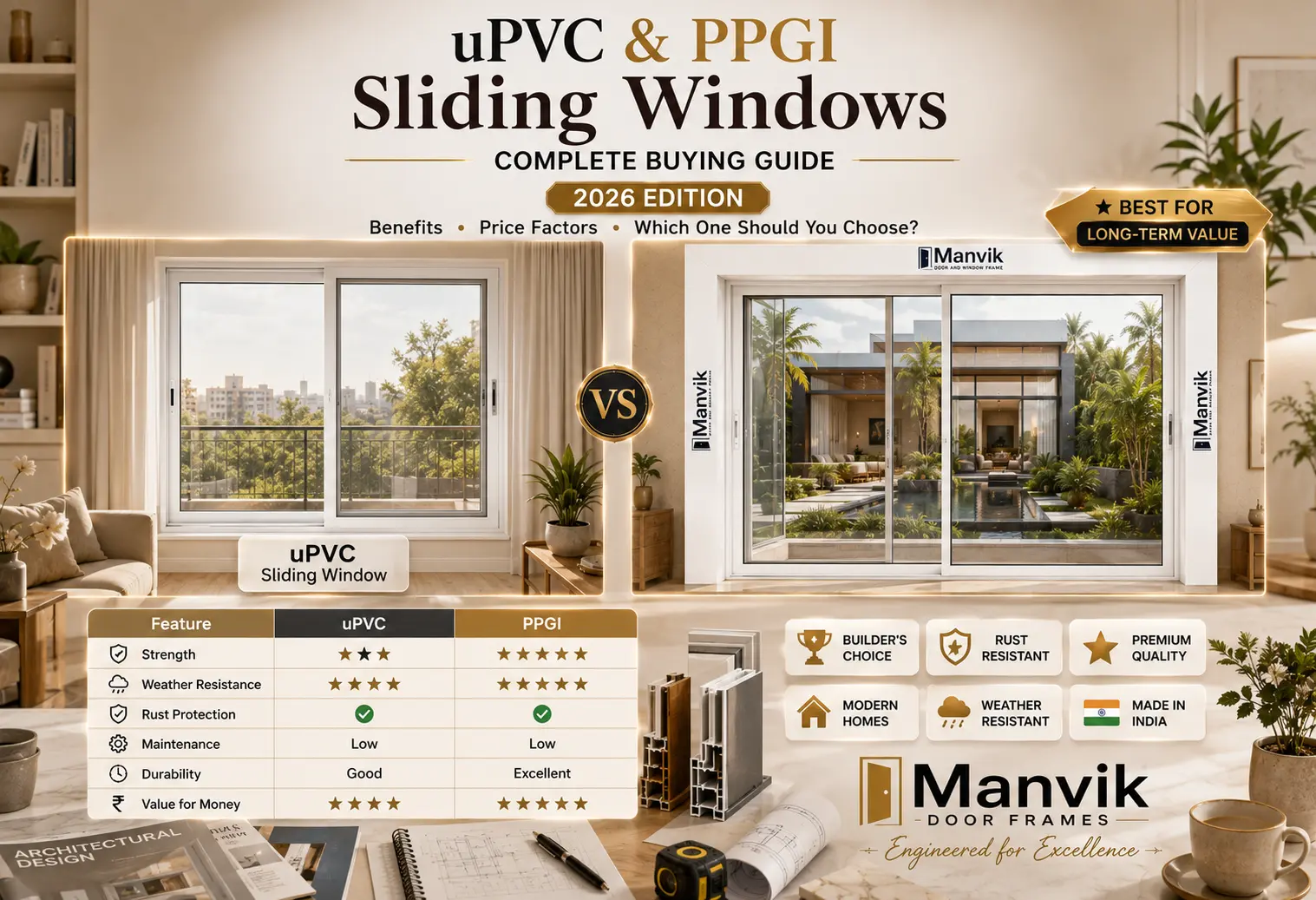
PPGI Sliding Windows vs uPVC Sliding Windows: Detailed Comparison
Choosing between uPVC and PPGI isn’t about one material being universally superior — it’s about matching the material’s strengths to your project’s actual requirements. Here’s an objective, side-by-side comparison:
| Parameter | uPVC Sliding Windows | PPGI Sliding Windows |
|---|---|---|
| Core Material | Rigid PVC with internal steel/aluminium reinforcement | Galvanized steel core with pre-painted coating |
| Structural Strength | Good for standard residential openings | Higher strength, better suited to large spans and heavy glass |
| Weather Resistance | Good; UV-stabilised grades resist yellowing | Strong; zinc coating resists corrosion, including in coastal/humid zones |
| Maintenance | Low; occasional cleaning | Low; factory coating reduces repainting needs |
| Expected Lifespan | Long, but can vary with profile quality and heat exposure | Long, with metal-core durability under structural load |
| Appearance | Wide range of colours and woodgrain finishes | Clean, modern metal finish with factory-applied colour options |
| Installation | Widely available installers across India | Growing installer network; increasingly common in project-scale builds |
| Cost vs Lifetime Value | Moderate upfront cost; value depends on profile grade | Often higher upfront cost per unit, but strong long-term structural value for demanding applications |
| Best Applications | Standard residential rooms, balconies, apartments | Large openings, commercial buildings, coastal sites, industrial facilities |
Which Sliding Window Lasts Longer?
Both can offer a longevity of service when they are specified and properly installed. uPVC’s life span is dependent on the high quality of the profile as well as UV stabilization. Its lifespan is tightly related to the high quality of the galvanizing process and paint coating. When structural stress is high (large spans, high glass, exposure to industry), a metal-core PPGI system typically shows lower, longer-term deflection.
Which Sliding Window Requires Less Maintenance?
They are both low maintenance compared to untreated wood and traditional steel. They do not require repainting in normal circumstances, but the factory-cured coating of PPGI can provide longer-lasting color stability as compared to other uPVC varieties exposed to strong, long-lasting UV.
Which Sliding Window Is Best for Indian Weather?
India’s climate is extremely diverse according to region. That is why you have to consider that the “best material” question depends on the location you’re planning to build. In dry, hot regions where there is a lot of sun exposure, UV-stabilized uPVC is a good choice; however, extremely high continuous heat for a long time can be a test of stress for all plastic-based profiles. For coastal areas or regions with high humidity (think Mumbai, Chennai, Kochi, or Goa and Goa — the durability of galvanized PPGI can be a real benefit because salt-laden air speeds up the process of corrosion for poorly coated or untreated metal more quickly than it degrades the quality of a uPVC or PPGI system. The key is to make sure you match the strength of the material to your local climate, rather than thinking that one choice is the same across the region.
Cost vs Long-Term Value
It’s tempting to evaluate uPVC as well as PPGI only based on their upfront costs per window. But this comparison doesn’t take into account the larger image of a purchase likely to last for decades. Lower initial costs are just a good deal when the product is able to last for the duration you’re expecting it to. Large openings, commercial-scale construction, or sites with higher structural demands and exposure are greater The additional expenditure on a sturdy PPGI A solution can help offset the potential repair, replacement, or upkeep costs. In the case of standard rooms that have mild exposure, a top-quality uPVC product typically delivers solid quality without requiring the added structure capacity PPGI offers.
Which Sliding Window Is Best for Homes?
For standard rooms in the home, including bedrooms, balconies, and living spaces with relatively large openings, sliding windows made of uPVC can be a sensible and cost-effective option, as they are readily available and offer excellent insulation and can be adapted to typical home sizes well.
If you live in homes with bigger openings, floor-to-ceiling glazing, as well as coastal exposure, those who want the highest level of longevity in the structural period, PPGI sliding windows should be considered with seriousness, especially for villas and detached houses that are designed for long-term use.
Which Sliding Window Is Best for Commercial Projects?
Institutional and commercial buildings are likely to have bigger windows and higher use frequency as well as higher durability requirements. That’s why sliding windows made of PPGI have become increasingly popular—because the strength of the metal core can handle greater spans and more heavy glass, with a greater degree of structural strength as well as the coating that resists corrosion can be used on buildings that require lasting for a long time without requiring maintenance. However, for small commercial areas such as retail or office spaces equipped with windows of standard size, uPVC is a feasible and cost-effective alternative.
Buying Checklist Before Purchasing Sliding Windows
Before you finalize any order, walk through this checklist:
- Have you compared quotes on identical specifications (profile/coating, glass, hardware)?
- Have you confirmed the reinforcement or coating grade in writing?
- Have you asked about warranty coverage for frame and hardware separately?
- Have you checked the manufacturer’s track record and site references?
- Have you factored in your local climate (heat, humidity, coastal salt exposure)?
- Have you considered the size and load of the window openings involved?
- Have you asked whether the joints are welded or use weld-free/riveted assembly?
- Have you confirmed installation timelines and after-sales support?
Common Buying Mistakes
- The comparison of prices is not an attempt to compare specs. A “cheaper” price usually means a lower profile, glass of lower quality, or a basic piece of hardware.
- Inattention to reinforcement information. Frame strength depends greatly on the inside of the profile and not only the exterior material.
- No question regarding the quality of coatings or stabilization. Both uPVC (UV stabilization) and PPG (zinc the thickness of coating) come with quality tiers that have a significant impact on the duration of.
- Not considering weather suitableness. A window system that performs admirably in an area with a moderate climate could behave differently when it comes to high-heat or coastal zones.
- Choose based on only the brand’s name. Always verify actual specifications instead of relying only on claims made by marketing.
- The site measurement is not taken into account. Inaccurate measurements lead to issues with installation regardless of the material used for windows.
- Don’t plan to take glass loads. Larger sliding panels that have laminated or thick glass are more strained on the frame as well as the hardware Make sure your frame as well as the roller system has been designed to handle the particular glass weight that you intend to apply.
- Inattention to the drainage. Sliding windows need adequate weep holes as well as drainage channels in order to prevent the water from pooling in the heavy rainfall. This detail can be overlooked, but it has a significant impact on long-term performance.
- Making a decision quickly without samples of the site. Photos and brochures aren’t able to fully describe how the profile is felt, how it slides, or how it seals; asking for a tangible sample or stepping into a fully functioning website is among the most trusted ways to confirm an advertiser’s claim prior to placing an order in bulk.
Why Choose Manvik Door Frames
If you are a buyer who is considering PPGI sliding windows a part of their studies, Manvik Door Frames makes PPGI sliding windows as well as door frames that are built on precision manufacturing as well as weld-free technology, which is specifically designed to maintain the integrity of coatings at each joint.
What Manvik Door Frames offers:
- Premium Sliding PPGI Windows made from the highest quality galvanized, pre-painted, and controlled galvanized steel
- High-quality manufacturing for consistent dimensions throughout units
- Weld-free technology, which avoids heating-affected areas at joints
- Rivet Technology to provide solid, reliable mechanical assembly
- Design that is corrosion-resistant designed to handle a wide range of Indian weather conditions
- Custom-designed dimensions to meet commercial, residential and industrial requirements
- PAN India provide to builders, contractors and bulk buyers
- Technical assistance to assist you in choosing the appropriate system for your specific project
If your construction project could benefit from the robustness and durability PPGI sliding windows provide the best value, consider asking for a quote free of charge or speaking with the Manvik technical staff prior to deciding on your window specifications. It is also possible to contact Manvik Door Frames directly for price quotes or to discuss the possibility of custom or bulk orders. Also, you can take a look at the PPGI Door Frames and Weld-Free Door Frames and Rivet technology Door Frames to complement the building.
Frequently Asked Questions
Q. What are uPVC sliding windows?
uPVC sliding windows are horizontally-opening windows made from rigid, reinforced PVC profiles, known for low maintenance and good thermal/sound insulation.
Q. Are uPVC sliding windows worth buying in India?
For most standard residential applications, yes — provided you choose a quality-verified profile with adequate reinforcement and UV stabilisation.
Q. What is the price of uPVC sliding windows in India?
Price varies based on profile brand, glass type, size, and hardware; always request a like-for-like quote rather than comparing generic price ranges.
Q. Which is better: uPVC or PPGI sliding windows?
Neither is universally better — uPVC suits standard residential openings well, while PPGI suits larger spans, commercial buildings, and high-durability requirements.
Q. Which sliding window lasts longer?
Both can offer long lifespans when specified correctly; PPGI’s metal core tends to show less long-term deflection under heavy structural loads.
Q. Which sliding window requires less maintenance?
Both are low-maintenance materials compared to wood or untreated steel; actual maintenance needs depend on profile/coating quality.
Q. Are PPGI sliding windows good for homes?
Yes, particularly for larger openings, coastal locations, or homeowners prioritizing long-term structural durability.
Q. Which sliding window is best for Indian weather?
Both can perform well if properly specified — UV-stabilised uPVC handles heat exposure, while galvanized PPGI handles humidity and coastal corrosion well.
Q. Which sliding window is best for commercial buildings?
PPGI sliding windows are often preferred for commercial and institutional projects due to their structural strength for larger openings.
Q. How do I choose the right sliding window material?
Evaluate your opening size, climate exposure, budget, and expected building lifespan, then compare verified specifications rather than price alone.
Q. What does PPGI stand for?
PPGI stands for Pre-Painted Galvanized Iron — steel that is zinc-coated and then factory-painted before fabrication.
Q. Is PPGI the same as regular steel windows?
No — regular untreated or site-painted steel lacks the factory-controlled zinc and paint coating that gives PPGI its corrosion resistance.
Q. Do uPVC windows turn yellow over time?
Lower-grade, non-UV-stabilised uPVC can discolour under intense, prolonged sun exposure; UV-stabilised profiles are designed to resist this.
Q. Can uPVC sliding windows be used for large window openings?
uPVC is generally suited to standard residential opening sizes; very large spans or heavy glass loads may benefit from a metal-core system like PPGI.
Q. What is weld-free technology in PPGI windows?
It’s a fabrication method that joins frame sections mechanically (e.g., via rivets) instead of welding, preserving the protective coating at joints.
Q. Are PPGI sliding windows corrosion resistant?
Yes — the zinc coating acts as a barrier and sacrificial layer that protects the underlying steel from rust, even in humid or coastal conditions.
Q. How long do uPVC sliding windows typically last?
With quality profiles and proper installation, uPVC sliding windows can last many years, though longevity varies with climate and profile grade.
Q. Is uPVC or PPGI cheaper?
Upfront pricing varies by specification, but PPGI often carries a higher initial cost that can be offset by long-term structural durability for demanding applications.
Q. Do PPGI sliding windows need painting after installation?
Generally no — the factory-applied pre-painted coating is designed to reduce or eliminate the need for repainting under normal conditions.
Q. Where can I buy PPGI sliding windows in India?
Manufacturers like Manvik Door Frames supply PPGI sliding windows PAN India, including custom sizes and bulk orders for builders and contractors.
Final Conclusion
uPVC Sliding Windows India: The decision between sliding windows made of uPVC and the PPGI sliding windows is ultimately about choosing the right material for the design you want. uPVC is a sturdy option for traditional residential windows in India and offers a great quality of insulation and low maintenance and expenses. PPGI sliding windows constructed with a galvanized steel base and coated with a protective layer that is applied by a factory are a popular alternative for bigger windows, commercial structures, and other projects where longevity of structural strength is an important consideration. PPGI Window Frames
Instead of deciding based on price alone or trends, take a look at your construction type as well as the climate, opening dimensions, and the expected life span. Then, compare the specifications provided by manufacturers. If you think your building could benefit from the durability and strength in PPGI sliding windows, Manvik Door Frames can provide advice on technical aspects, customizing sizing, as well as PAN India supply to help you choose the ideal window to build.


