

If you’ve lived through a Delhi NCR, Rajasthan or Gujarat summer, you already know the feeling — you shut every window by 9 am, pull the curtains, switch on the AC before lunch, and the house still feels like it’s holding onto heat long after the sun goes down. That’s not bad luck. It’s physics. Sunlight hits your roof, walls and glass all day, that heat works its way inward, and by evening your rooms are radiating warmth back at you even after the outdoor temperature has dropped. Learning how to protect your home from extreme heat isn’t about one clever trick — it’s about controlling how heat gets in, how it moves through the building, and how easily it gets out again. PPGI Sliding Windows
This guide walks through that whole system: windows, doors, glass, shading, ventilation, roof and wall insulation, and sealing — the practical, unglamorous details that actually decide whether a room stays livable in June or turns into an oven by 2 pm. Along the way, we’ll also look at where window and door frame choices, including PPGI (Pre-Painted Galvanized Iron) systems, fit into that broader strategy.
How to Protect Your Home from Extreme Heat
Protecting a home from extreme heat usually comes down to combining several measures rather than relying on one fix: external shading on sun-facing openings, solar-control glazing, good weather sealing to stop hot air leaking in, cross ventilation timed to cooler hours, roof and wall insulation, and well-installed windows and doors. No single product “cools” a house — the combination reduces heat gain and cuts how hard your AC or fans have to work.
Key Takeaways
- Windows and doors influence how much solar heat gain a room experiences, but they’re one part of a larger heat-control system, not the whole answer.
- Glass type matters more than most people realise — plain clear glass and safety (toughened) glass do not automatically block heat.
- External shading — overhangs, louvers, pergolas — is usually more effective than internal curtains alone, because it stops heat before it reaches the glass.
- Cross ventilation only helps when outdoor air is actually cooler than indoor air; timing matters as much as design.
- West-facing and, in many parts of India, south-west-facing openings usually need the most attention because of intense low-angle afternoon sun.
- Roof and wall insulation address a large share of total heat gain in Indian homes and shouldn’t be ignored just because windows get more attention.
- Weather sealing reduces hot air infiltration around frames, which is a separate problem from heat passing through the glass itself.
- Window frame systems, including PPGI window and door frames, can be part of an effective heat-control strategy when paired with the right glass, seals and installation quality.
Why Extreme Heat Makes Homes Uncomfortable
The heat enters a house by a variety of well-understood ways, and most homeowners are only aware of a couple of them.
Gain in solar energy is the biggest one. When sunlight strikes glass, the walls or the roof, a portion of the radiation is absorbed and transformed to heat, which is transferred to the structure. Glass is particularly adept at allowing this to happen, because it’s mostly transparent to the sun’s radiation in the short-wave range but entraps the longer-wave heat, which radiates out and creates the similar “greenhouse” effect that makes the car that is parked unbearable for minutes. Sliding Glass Window
The transfer of heat across an envelope of the structure, including the walls, roof floor, openings and floorsoccurs more slowly, but it does build up over the entire day. A concrete roof that is exposed to direct sunlight for about eight to nine hours can store a massive amount of heat, and it releases it into rooms below until late into the evening. That’s the reason why flats on top floors and single-storey homes are often hot for a long time after sunset.
Air leakage create the issue in two different ways. Rooms that are sealed and have no air circulation trap heat that does enter and gaps in doors that are old or poorly fitted let the hot air from outside flow in and overflow, ruining any cooling effort that is taking place inside.
Storage of heat in floors and walls is a part that we see but don’t often mention the room. It may feel hot even with air conditioning on due to the fact that the thermal mass of walls keep radiating heat back into the room for a period of time.
When taken together, these processes provide the explanation for why homes may feel hot, even if it’s “done everything right” with AC and fans. in the event that the building itself keeps absorption and holding heat throughout the day long, your cooling systems are fighting an unwinnable battle.
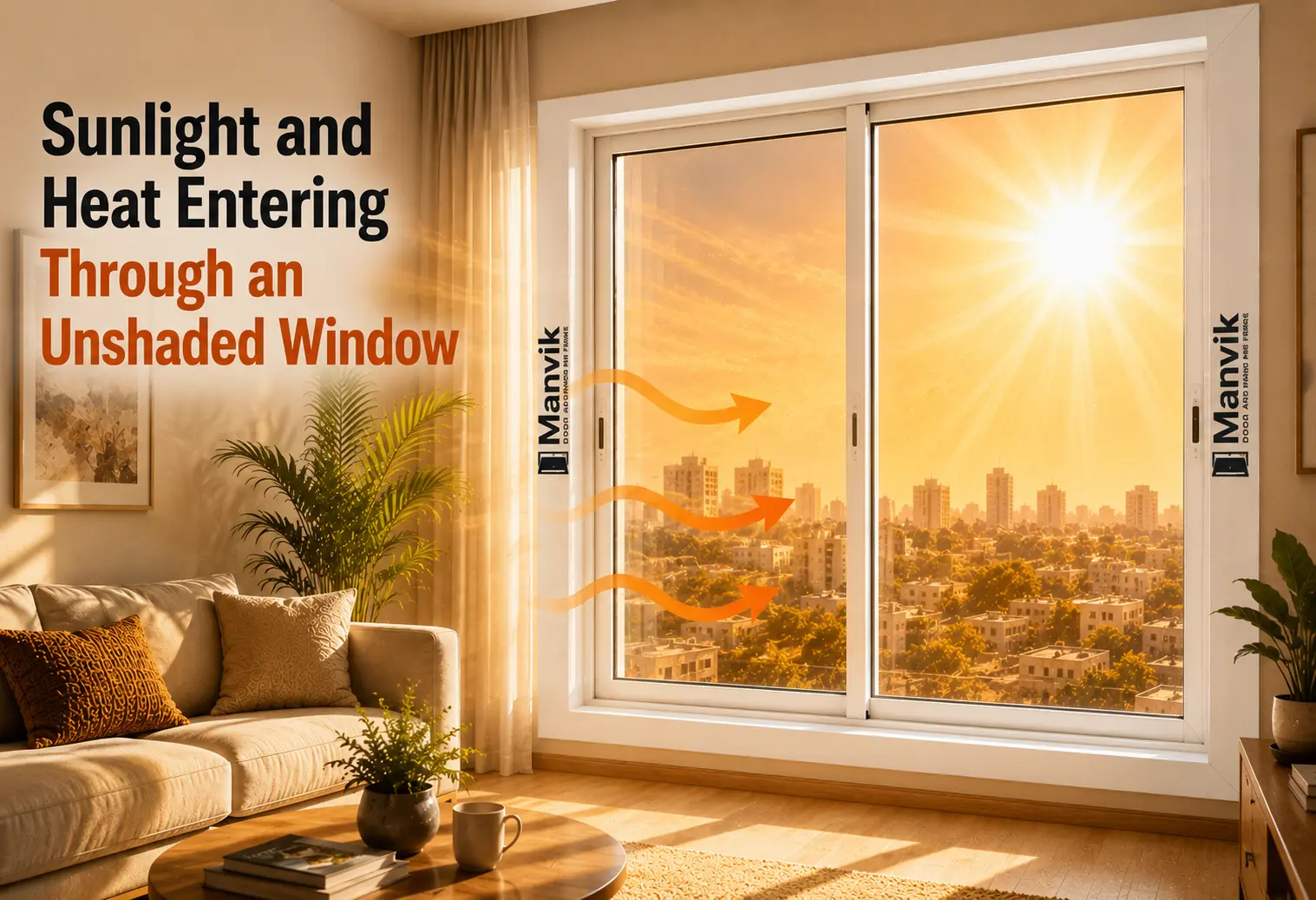
How Does Extreme Heat Enter Your Home?
Through Windows
Windows are typically the single biggest source of unintentional solar heat gain within homes due to the fact that glass is more heat-permeable than walls similar in dimension. The severity of the issue depends on the glass type and size, window orientation, and if there’s shading.
Through Doors
Doors are more important than people think, particularly the sliding doors that are glazed balconies doors and any door that has a big glass panel. Doors with a weak frame sealing could let hot air in on the edges.
Through the Roof
In single-storey houses and top-floor apartments the roof is typically the largest heat source of all, since it is the one that receives the most direct sun exposure during the day.
Through Exterior Walls
Walls absorb heat less than glass or roofs however south and west-facing walls can hold large amounts of heat in late afternoon and release it to the interior space shortly after darkness.
Through Air Leakage
The gaps around door and window frames, joints that aren’t sealed and deteriorated weatherstripping permit warm air to penetrate throughout the day — this is a problem that does not have anything to do with glass performance but has all to be related to the installation process and seal quality.
Through Poor Ventilation
Contrary to popular belief, a house which is completely sealed during the day could be hotter at night due to the fact that heat that has built inside is unable to escape once temperatures outside decrease. Best Window Frame Material
Windows and doors are able to tackle the first two as well as partially deal with air leakage by appropriate sealing, but the wall and roof performance requires distinct, building-level steps. Anyone who claims that windows can “solve” extreme heat is way too simplistic.
How Windows can help protect your home from Extreme Heat
A properly-specified window system can help in a variety of ways and it’s worthwhile to consider each of them separately instead of considering “good windows” as a single property that is magical.
The glass selection decides the amount of sun radiation enters the glass and the amount reflecting or absorbed before reaching the room. The orientation of the window determines how much direct sunlight a particular window actually gets through the day. Shading is a feature that can be built into the window’s design or added on its ownblocks sunlight before it hits the glass. Sealing prevents the flow of hot air around the frame no matter how high quality the glass is. Frame choice influences the extent to which heat is transferred through the frame and how well it retains its shape and seals over time and how easily the entire unit is maintained. The configuration of the panel such as sliding and fixed, casement or fixedinfluences both the potential for ventilation and how well the unit can be closed. Quality of installation connects all the above the best glass and frames perform poorly if they are fitted with gaps or with no sealing and flashing.
It is important to be clear that properly chosen and installed windows will effectively reduce heat gain and increase the comfort. They’re not a standalone cooling system. Their real-world performance is contingent on the window, frame, and installation — not just the brand of the window “brand” alone. New Technology Door Frames in India
Best Glass Options for Hot Weather
Clear Glass
Clear float glass is the standard option, and offers little to no solar control. This is the most common type of glass homes have and is usually the first thing you should consider upgrading in the event of heat issues.
Tinted Glass
Tinted (body-tinted) glass reflects some of the solar radiation, thus reducing the appearance of glare as well as some heat transmission, but the heat absorbed by it is returned, partially to the surrounding area. It also blocks the natural light better than reflective or low-e options.
Toughened Glass
The toughened (tempered) glass can be described as glass that is tempered or toughened. It’s a security glass It is treated with heat to ensure that, if it does break it, it splits into smaller fragments that are less hazardous. This is crucial in terms of impact resistance and building safety standards, but toughening by itself does not confer glass properties that control solar heat. Glass that is toughened can be paired with coatings or tints but the process of forming toughened glass does not block heat.
Laminated Glass
Laminated glass is sandwiched by the interlayer (commonly PVB) between two glass panes. This increases security, safety, and noise insulation. Certain interlayers that are laminated can limit UV radiation, but this is also an individual property that is distinct of the solar heating control.
Double-Glazed (Insulated) Glass
A double-glazed structure consisting of two panes that have gas-filled or sealed air gap — decreases heating transfer across the glass by shielding against the conductivity of heat as well as any solar-control capabilities the panes possess. It can help keep heat out in summer, but keep warmth inside during winter. It’s one of the most efficient all-round options for extreme environments, even though it increases the cost and weight.
Low-E (Low-Emissivity) Glass
Low-E glass features an extremely thin microscopically-thin metal-oxide layer that reflect a small amount from infrared (heat) radiation, while permitting visible light to pass through. It is one of the most efficient options for solar heat control particularly when combined in conjunction with double glazing.
An important distinction to remember: safety (toughened and laminated) and solar control (tinted Low-E, tinted reflecting coatings) are distinct glass properties. Glass is secure without being heat-resistant and also heat-resistant, but not particularly sturdy. For performance in extreme temperatures, take a take a look at the solar heat gain coefficients and the visible light transmission figure instead of assuming “toughened” automatically means “heat-resistant.” Rivet Technology Door Frames
What Is Solar Heat Gain and Why Does It Matter?
Solar heat gain refers to the amount of sunlight that passes through the glass and then converts to heat inside. It’s often expressed as”the Solar Heat Gain Coefficient (SHGC) (a lower value means that less solar heat passes through.
Certain factors affect how much solar energy gain a room actually experience:
- The area of the glazing The larger windows allow in more heat, unless shades and glass compensate.
- Window-to-wall-ratio homes with large windows (common in contemporary designs) require more careful heat control design than houses with windows that are smaller.
- Shade and orientation The identical glass functions very differently when it is a west-facing wall unshaded as compared to a shaded, north-facing one.
- The specification for Glass as described in the previous paragraphs, SHGC varies significantly between transparent, tinted, reflective, and Low-E glasses.
Understanding the solar heat gain is beneficial since it allows you to reframe the issue properly: the objective isn’t to “block all sunlight” but “manage how much solar energy is allowed to convert into indoor heat,” while keeping sufficient sunlight and views.
Best Window Frame Materials for Hot Indian Weather
| Factor | PPGI | Aluminium | uPVC | Wood |
|---|---|---|---|---|
| Heat-related considerations | Frame heat performance depends on coating quality, design and glass paired with it | Conducts heat readily; performance depends heavily on thermal breaks and glass used | Naturally low thermal conductivity; frame itself contributes little heat transfer | Naturally low conductivity, but performance varies with wood type and finish |
| Durability | Strong when properly galvanized and coated; performance depends on manufacturing quality | Generally durable and dimensionally stable | Durable in most conditions; can vary with UV-stabilisation quality | Durable if well-maintained; more vulnerable to weather without upkeep |
| Maintenance | Low-to-moderate; periodic inspection recommended | Low maintenance | Very low maintenance | Higher maintenance — periodic painting/sealing needed |
| Moisture resistance | Good when the coating and galvanizing are intact | Good, doesn’t rot | Good, doesn’t rot or absorb moisture | Vulnerable without proper treatment |
| Corrosion considerations | Galvanized base is designed to resist corrosion; edge-cutting and scratches need attention | Can oxidise/pit in some conditions without proper anodizing or coating | Not applicable — uPVC doesn’t corrode | Not applicable — wood decays rather than corrodes |
| Design flexibility | Moderate; suited to standard and custom sliding/casement formats | High; supports slim sightlines and large spans | Moderate; slightly bulkier profiles than aluminium | High for traditional and custom designs |
| Residential use | Suitable, particularly for sliding windows and door frames | Widely used | Widely used | Common in traditional and premium builds |
| Commercial use | Suitable for many commercial applications | Very common in commercial facades | Less common at large commercial scale | Less common for large commercial use |
| Cost considerations | Generally competitive, varies by specification | Mid-to-high, varies by finish | Mid-range | Typically higher, especially for quality hardwood |
No single frame material is universally “best” for hot climates — overall thermal performance depends on the complete window system: the glass installed in it, how well it’s sealed, how it’s installed, and how it’s maintained over time, not the frame material in isolation.
Are PPGI Windows Suitable for Hot Weather?
PPGI is the abbreviation for Pre-Painted Galvanized Steel, which is steel that’s been coated with hot-dip galvanization (coated with a zinc-protective layer) and finished with a paint coating applied by a factory instead of steel coated on-site after the fabrication.
Some of the characteristics are pertinent when considering PPGI for high-UV, hot Indian conditions:
- Protective galvanized base The zinc coating is made to shield the steel underneath from rust and corrosion. This is particularly important in areas with dust, humidity fluctuations, and monsoon exposure along with the summer heat.
- The pre-painted surface: applying the paint coating in controlled conditions in the factory prior to fabrication usually results in a more durable, consistent finish than the paint applied on site and may improve the resistance to chalking and fading due to UV exposure over the course of time.
- Durability concerns: How well a PPGI frame lasts for years is contingent on the thickness of the coating, the galvanizing grade, and the way the edges are treated and how joints get cut during manufacturing, the details of which vary between different manufacturers.
- Maintenance frames made of PPGI generally need regular cleaning and inspection of joints and seals, as do other metal frame systems.
- Quality of manufacturing and installation: as with any frame material, poor manufacturing or installation can weaken the best base material.
- glass compatibility, window style: PPGI frames are coupled with different glass specifications, including tinted, low-E, or double-glazed in accordance with the project’s heat-control requirements.
It’s crucial to be clear on one point: PPGI itself does not provide thermal insulation automatically. Like aluminum, steel conducts heat, and so the frame’s contribution to heating control is not as significant as window, glass, or sealing choices that surround it. It is true that what PPGI frameworks for doors and windows provide is a strong, sturdy, corrosion-resistant structure foundation for a window system The actual heat control performance is still dependent on the glass chosen and the quality of the seals and weatherstripping, as well as the care with which the frame is set up. Weld-Free Door Frames
PPGI Sliding Windows for Extreme Heat
PPGI sliding windows can be employed in a variety of areas where large glazed windows and ease of operation are important:
- Living rooms and bedrooms with sliding windows permit ample glazing, with no swing clearance that a casement window requires.
- Balconies with sliding panels can be used to fill in spaces.
- Kitchens that are air-conditioned and ease of cleaning are the top important factors.
- Commercial and office buildings where PPGI’s endurance and cost profile are suitable for more extensive or repeat installations.
What determines how the PPGI slider does in hot conditions is due to the same aspects discussed previously frames construction (how robust and sealed your profile) glass selection (clear tinted or clear) the rollers and tracks (smooth tracks that are well-fitted reduce air leaks through the gaps) as well as seals (brush gaskets or seals that meet at the junction of rails are more important on sliders than casement windows because sliders depend on compression at lower points) and regular upkeep (tracks and seals must be checked on a regular basis, since dust and grit are prevalent when operating in Indian conditions and may impact how fast the slider is closed).
How to protect West-facing Windows against Extreme Heat
It’s one of the areas with the highest impact for Indian homes. West-facing windows are exposed to afternoon sun at a low angle, which is much more difficult to shade by an overhang. It usually coincides with the hottest times of the day.
Effective strategies include:
- Shaders that are external such as overhangs, sunshades that project or fixed awnings designed to block sun’s low-angle and is more efficient than internal treatments as it blocks heating before it gets to the glass.
- Louvers Fixed or adjustable louvers externally which block direct sunlight but still allow some daylight and airflow.
- Blinds and drapes can be a valuable internal layer, especially translucent or light-coloured alternatives however, they are they are less effective as external shading because the heat is already passing through the glass before it is absorbed by the inside of the blind.
- Pergolas are suitable for balconies with west exposure and patios as well as window walls particularly when they are paired together with slatted or climbing cover to add shade.
- Solar-control glass tinted or Low E glass, particularly on west-facing windows, which is where the sun’s rays are the highest.
- A proper window size for new construction, intentionally limiting the glazed area on the west façade (or offset it by powerful shading) is more efficient rather than trying to make up for it for it after the fact.
- Vegetation Deciduous tree or climbing trellis along the west side could provide shade in the winter months if the conditions on the site allow it, but it must be designed in relation to root system and ongoing maintenance.
Sunlight from afternoon on un-shaded west-facing windows is often one of the biggest single causes of indoor overheating that’s why this area receives more attention than north or east-facing windows in most heat-protection designs.
How to protect South-facing Windows from heat
South-facing windows located in the Northern Hemisphere (which also includes India) get more consistent sunlight exposure throughout the day as opposed to east- or north-facing openings, although generally at a greater sun angle than walls facing west at the end of the afternoonthat makes overhangs more effective than on west-facing walls.
The most effective measures are well-sized horizontal overhangs (which will block sun with higher angles more effectively than west-facing walls) and external shading devices that are suited to the angle of the sun at your particular latitude as well as solar-control windows where large glass areas facing south are planned and a careful window design which avoids large, un-shaded windows and ventilation techniques that make the most of any cross-breezes the direction of the sun.
It is important to be cautious the exact sun angles and the most effective shade depth depend on the specific location and latitude and therefore, the generic “south-facing” advice should be taken as a guideline instead of a exact design principle. A local architect or window specialist can determine the depth of shade depending on your specific location. which type of door frame is best
How to Reduce Heat Coming Through Windows
A simple, orderly checklist:
- Utilize the right glazing — shift away from plain glass towards tinted, Low-E or double-glazed units if your budget permits.
- Add shading to external areas -louvers, overhangs or awnings over sun-exposed windows.
- Use blinds or curtains as a second layer for a secondary layer, particularly light-coloured or reflective fabrics.
- Enhance weather seal Replace worn weatherstripping and inspect for any gaps in frames.
- Reduce the need for direct sun exposure — review the oversized glazing on south and west walls.
- Select the appropriate frame systems that are compatible with your budget, climate and maintenance needs.
- Make sure the installation is done by a professional A well-specified window performs poorly if it is not properly fitted.
- Maintain seals and drainage Clean gaskets and weep holes regularly, especially prior to summer.
How to Keep Your Home Cool During a Heatwave
Morning
Ventilate during the time that outdoor air remains coolusually early in the morning before temperatures rise — and utilize this window to eliminate the heat that has built up over the night. Make sure to shade your the east side of windows that are exposed to the direct morning sun.
Afternoon
This is the time when heat gain is the highest. Control direct sunlight in the south-west and west-west windows Close curtains or blinds whenever appropriate, and reduce unnecessary activities that generate heat inside (cooking at high temperatures and running heat-producing appliances) in peak times.
Evening and Night
It’s time to vent again after outside air has chilled below the temperature of indoor air and if local conditions for air quality and safety allow. This varies depending on the location and the season, so you should use an instrument to measure temperature instead of thinking that it is always cooler outside after the darkness.
Alongside these time-saving strategies ceiling fans aid in improving air circulation (which increases comfort without lowering temperature) and cross-ventilation between two openings can effectively transfer air throughout a home in the event of a favorable climate. Roof-level measures can reduce the primary heating source for the majority of homes. Additionally, insulation can reduce the amount of stored heat is radiated back into rooms following sunset. The need for air conditioning is not a non-issue in the event of a heat wave shade and natural airflow decrease the burden for your AC and increase comfort during cooling cycles, however, they’re not guaranteeing that your home will remain cool during prolonged, extreme temperatures by themselves.
Natural Ventilation vs Air Conditioning During Extreme Heat
Natural ventilation works best in situations where outdoor temperatures are actually less than indoor temperature and humidity is controlled. the air quality outside is decent and there’s a sufficient pressure difference (wind or the temperature driven stack effect) to actually push air throughout the house rather than sitting in the windows that are open.
It is less efficient, and often ineffective, when temperatures in the outdoors exceed the indoor temperature for prolonged durations (common in a true heatwave) when humidity is too high that airflow isn’t enough to effectively cool the occupants, indoor air quality is low or the layout of the building doesn’t permit a genuine cross-breeze.
In the real world, houses in warm Indian conditions benefit from using a mix of strategies that focuses on natural ventilation in the cooler times of the day, and use air conditioners during the peak temperatures, not treating both as opposing strategies, or either-or. Doors and windows that are well-designed allow both methods providing controlled airflow in the event of a heat wave and sealing well enough to allow conditioned air inside even when the AC is on.
How Roof and Wall Insulation Help Reduce Heat
Windows receive a lot of attention in discussions about heat protection however, for a lot of Indian homes — specifically top-floor flats, independent homes as well as buildings with terraces exposed The roof provides more total heat loss than windows do due to the continuous direct sunlight exposure across an area that is much bigger.
Roof insulation (rigid insulation boards, spray foam or insulating screeds under waterproofing) minimizes the amount of heat radiates from the hot roof surface to the floor below. Reflective roof coatings (cool roofing coatings and light-colored finishes) minimize the amount of solar radiation the roof’s surface absorbs in the first place. Insulation for ceilings acts as a second protection even when roofing-level insulation wasn’t part initial construction. The wall insulation is most important on wall surfaces facing south and west that absorb substantial heat throughout the day and then re-radiate it to the interior space after sunset. Design of the building envelope more broadly includes wall thickness and cavity construction, as well as external finishes -all affect which amount of energy the wall holds and emits.
The real takeaway is that improvement to the door and window are extremely beneficial, but in a lot of Indian homes, they must be considered as part of an overall strategy that also includes wall and roof improvements and not as an all-inclusive solution by themselves.
How Weather Sealing Helps During Hot Weather
Weather sealing is a solution to a particular problem that’s easy to miss: air leakage and is distinct from heat that passes through a frame or glass material.
Leakage of air is caused by gapsbetween door and window frames, in the joints of installation, and through worn weatherstripping, and allows hot outdoor air, which is often dusty, continue to infiltrate, regardless of the quality of your glass is. It’s a physical gap issue that can be solved with properly fitted gaskets, weatherstripping and the correct installation.
The transfer of heat through the frame or glazing However, this occurs even in a sealed window because heat is absorbed and radiated through glass and solid materials. This is a problem that can be addressed through the glass material frame material, design and not through sealing.
Both issues need to be addressed both issues separately. A house can be equipped with excellent double glazing that is low-E, but be hot in the event that the frames aren’t secured and heat is getting through the gaps. In the same way, a perfect seal on plain glass won’t prevent the significant increase in solar heat. Dust infiltration is another problem that’s a practical one in numerous Indian regions. Poor sealing doesn’t only let heat in, but it also lets dust in as well and increases the maintenance burden.
Common Mistakes That Make Homes Hotter
- Installing large, un-shaded windows facing west solely for aesthetics, not considering the heat load it causes.
- Selecting windows based on their design alone, and not checking the specifications of the glass or SHGC.
- It is a mistake to ignore the type of glass completely and thinking “toughened” or “double-glazed” is a sure sign of resistant to heat.
- Poorly installed frames leave gaps in frames that are otherwise of good quality.
- Deferred maintenance allows seals to become weaker and gaps grow over time.
- The home is sealed completely and there is no ventilation plan could trap heat in the home and alter the quality of indoor air.
- Over-investing in windows only.
- Relying solely on AC without taking care of the root cause of heat gain, which can result in excessive operating costs and systems working longer than is necessary.
- Selecting the frame’s hardware and rollers solely based on cost can lead to wear that is premature and gaps that allow air get in.
- The routine maintenance of seals, tracks and drainage systems, especially prior to the start of summer.
15 Effective Ways to Safeguard your home from Extreme Heat
- Replace your window glass with the solar control option that fits your budget.
- External shading can be added such as louvers, overhangs or awnings exposed windows to the sun.
- Blinds and curtains are great for a secondary layer of insulation.
- Improve the weather-proofing around door and window frames.
- If needed, check and modify the orientation of windows and sizes for new builds.
- Plan ventilation according to the outdoor temperatures, not set time of day.
- Insulate the roof, particularly on the upper floors as well as single-storey houses.
- Make sure that walls are properly insulated on south and west-facing walls when it is feasible.
- Reduce the amount of un-shaded glazing on facades facing west.
- Keep windows clean — clean tracks and check for gaskets in the summer, each year.
- Check and replace worn door seals.
- Make use of ceiling fans strategically to improve airflow and ease.
- Run the AC efficiently Set moderate temperatures, and pair them with a good seal so that cooled air doesn’t leak.
- Select window frame options that are suitable to your budget, climate and maintenance capabilities.
- Consider heat control during the design phase for new construction rather than retrofitting later.
How to Choose Windows for a New Home in 2026
An effective framework for those who is deciding on windows for a new building or a major overhaul:
- The Orientation (map) showing which facades are able to receive morning, midday, and afternoon sun, before deciding on the size of windows.
- Size of window The larger openings require proportionately more shading, and a better glass specifications.
- Type of glass choose by SHGC and the visible lighting requirements for each façade there is no one general choice for your entire home.
- Framework material Consider weighing aluminium, uPVC, PPGI and wood against the durability maintenance, design and design requirements (see the table of comparisons above).
- Shading — think about outside shading devices in conjunction with window selection, and not in the last minute.
- Ventilation — choose which windows must be opened fully to allow cross-ventilation, and those that can be closed or fixed.
- Sealing Make sure you check the specifications for weatherstripping and gaskets not just the features that are listed in the headline of the product.
- Hardware hinges, rollers and locks impact the ability of windows to keep its seal throughout many years of use.
- Installation Check the experience of the installer with the particular frame system you’re selecting.
- Maintenance Consider the realistic maintenance for your selected material and the location (dust or coastal air and exposure to monsoon).
- Budget — balance the upfront cost against expected longevity and performance. The cheapest option per window isn’t always the most affordable over a period of 10 years.
- Local climate Take into account the humidity, heat and dust levels, rather than general national guidelines.
PPGI vs Aluminium vs uPVC for Hot Weather
A fair and objective comparison, but without the claim that any one material is superior in all respects:
PPGI is a possibility as an option if you are looking for a sturdy and corrosion-resistant steel frame at the lowest cost that is suitable for sliding doors and windows at home. frames. The manufacturer provides a high coating and galvanizing performance along with a careful manufacturing (clean cuts, correct joints, and proper).
Aluminium is a possibility as an option when thin sightlines, large glass spans or a specific architectural design are the top priorities, as well as when budget permits thermally broken profiles when minimizing the conductivity of heat is a particular issue.
UPC is an option in situations where the low maintenance and poor thermal conductivity in the material are the primary considerations and the slightly larger profile when compared to PPGI or aluminium isn’t an issue of design.
In each case the final decision is based on the whole window system (glass specification seal quality, the glass’s specifications, hardware and installation and not the frame material on its own. A properly specified PPGI window that has good sealing and glass will outperform the poorly-specified aluminum or uPVC window and the reverse is true.
Why Choose Manvik Door Frames for PPGI Window & Door Solutions?
Manvik Door Frames focuses specifically on PPGI window frames, PPGI sliding windows, PPGI sliding glass windows, and PPGI door frame instead of providing PPGI as an option from several unrelated products. This means that the entire manufacturing process – profile design and coating application, joint fabrication and fitting hardwareall of which are based on making sure you get PPGI systems correct instead of thinking of it as a secondary consideration.
For builders, homeowners and architects who are evaluating their choices, it is usually:
- Manufacturing based on PPGI which means that quality control and process improvement are centered on this material system.
- PPGI window frames as well as PPGI sliding windows suitable for residential uses including bedrooms and lounges, balcony, and kitchens.
- PPGI door frame designed for use on main doorways balconies doors, main doors and interior applications.
- Weld-Free Technology as well as Rivet Technology approaches to frame assembly. Both should be discussed with the manufacturer to learn the impact they have on the long-term seal’s integrity and the structural performance of your project.
- Support for specific needs as well as for smaller residential projects as well as larger commercial or bulk orders.
If you’re considering comparing PPGI against aluminum or uPVC to complete a specific task It’s worth asking exactly the glass seal and hardware specifications Manvik recommends for your openings that combination, and not the label for the frame material will be the deciding factor.
what windows can do against the extreme heat of your home.
Frequently Asked Questions
1. How can I protect my home from extreme heat? Combine external shading on sun-exposed windows, appropriate solar-control glass, good weather sealing, timed natural ventilation, and roof/wall insulation. No single measure works alone — it’s the combination that meaningfully reduces indoor heat gain.
2. How do I keep my house cool in summer? Shade west- and south-facing openings, ventilate during cooler morning and night hours, use ceiling fans to improve airflow, insulate the roof where possible, and use AC efficiently during peak afternoon heat rather than relying on it around the clock.
3. Which windows are best for extreme heat? There’s no single “best” window — performance depends on the combination of glass type (Low-E or tinted generally outperform clear glass), frame material, sealing quality and installation. Compare complete specifications rather than brand names alone.
4. What type of glass is best for hot weather? Low-E glass and double-glazed units generally offer the strongest solar-control performance, since they specifically reduce infrared heat transmission and conducted heat. Tinted glass helps to a lesser degree. Plain clear or toughened glass alone offers little solar-control benefit.
5. How do I stop heat coming through windows? Upgrade to solar-control glazing, add external shading like overhangs or louvers, use blinds or curtains as a secondary layer, and ensure the frame is properly sealed so hot air isn’t also leaking in around the edges.
6. Do heat-resistant windows really work? Windows specified with solar-control glass, appropriate shading and good sealing can meaningfully reduce heat gain and improve comfort. They reduce, rather than eliminate, heat entering a home, and work best as part of a broader strategy that includes roof and wall measures.
7. Which window frame material is best for hot weather? PPGI, aluminium, uPVC and wood each have different strengths around durability, maintenance and design flexibility. Overall thermal performance depends more on the glass, sealing and installation paired with the frame than on the frame material alone.
8. Are PPGI windows suitable for hot climates? Yes, when properly manufactured and installed. PPGI’s galvanized base resists corrosion and its factory-applied paint finish holds up well under UV exposure, but like other metal frames, its heat-control contribution depends on the glass and sealing used with it, not the frame material alone.
9. Are PPGI sliding windows good for Indian homes? PPGI sliding windows are used across bedrooms, living rooms, balconies, kitchens and commercial spaces in India, offering a durable, space-efficient sliding format. Performance for heat control depends on the glass specification, track and seal quality, same as any sliding system.
10. How can I reduce indoor heat without increasing AC usage? Focus on passive measures first: external shading, solar-control glass, roof insulation, weather sealing, and timed ventilation during cooler hours. These reduce the heat load your AC has to work against, which can lower both discomfort and running costs.
11. How can I protect west-facing windows from heat? Add external shading such as overhangs, louvers, pergolas or awnings specifically positioned to block low-angle afternoon sun, use solar-control glazing on these openings, and consider limiting unshaded glazed area on west façades in new construction.
12. How can I reduce heat entering through glass? Choose glass with a lower Solar Heat Gain Coefficient (tinted, reflective or Low-E rather than clear), add external shading to intercept sunlight before it reaches the glass, and pair this with proper frame sealing.
13. Is double glazing useful in hot weather? Yes. Double-glazed units insulate against conducted heat transfer through the glass, helping keep heat out in summer (and warmth in during winter), in addition to whatever solar-control properties the specific panes have.
14. Does window tinting reduce heat? Tinted glass absorbs a portion of solar radiation, which reduces glare and some heat transmission compared to clear glass, though it’s generally less effective than Low-E coatings and reduces natural light more.
15. Are curtains effective against summer heat? Curtains and blinds help, particularly light-coloured or reflective ones, but they work on heat that has already passed through the glass. External shading is generally more effective because it blocks the sun before it reaches the window.
16. How does roof insulation help? Roof insulation reduces how much heat conducts from a sun-heated roof surface into the rooms below. In top-floor flats and single-storey homes, the roof is often the single largest source of heat gain, making this one of the highest-impact improvements available.
17. How does weather sealing help? Weather sealing closes gaps around window and door frames that would otherwise let hot outdoor air infiltrate continuously, regardless of glass quality. It addresses air leakage specifically, which is a different problem from heat passing through the glazing itself.
18. Which is better for hot weather: PPGI, aluminium or uPVC? No material is universally better — each has trade-offs around cost, maintenance, design flexibility and how much heat conducts through the frame itself. The glass, sealing and installation quality paired with the frame typically matter more than the frame material alone.
19. What should I check before buying heat-control windows? Ask for the specific glass type and its solar heat gain performance, the frame material and its coating/finish, the sealing and hardware specification, and the installer’s experience with that exact system — not just a general product brochure.
20. Can windows alone protect a house from extreme heat? No. Windows are an important part of the solution, but roof insulation, wall performance, shading and ventilation strategy all contribute meaningfully to indoor comfort. Treat windows as one component of a complete heat-control plan, not a standalone fix.
Looking for PPGI Window or Door Frame Solutions for Your Project?
If you’re planning a new build, renovation, or a larger residential or commercial project and want to explore where PPGI window and door frames could fit into your heat-control strategy, Manvik Door Frames can walk you through product options, glass and hardware specifications, and custom requirements for your project — including bulk and project enquiries. Reach out to discuss your specific openings, orientation and climate conditions before finalising a specification


